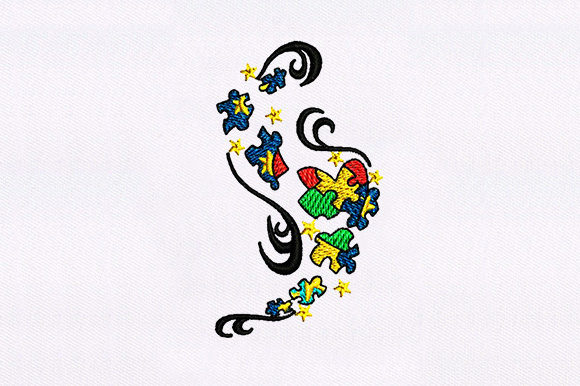
Autism Embroidery Design: A Craft Fair Seller's Review
When I first opened the Autism machine embroidery design file, I was looking at it through the eyes of someone who has spent years behind a multi-needle machine, building a booth from scratch, and learning what actually sells across a weekend market. I test every design I consider for production, and I want to share what I found with this one. If you are an Etsy seller, a boutique maker, or a creative entrepreneur preparing for your next craft fair, this review is meant to help you decide whether Autism belongs in your product lineup.
First Impression of the Autism Design
The Autism embroidery file carries a clean, modern, and purposeful feel. It is not overly ornate or farmhouse rustic. It is not funny or cute in a playful way. Instead, it leans toward a soft, minimal, and awareness-driven visual identity. The design communicates a message of inclusion and recognition, which makes it a natural fit for awareness-themed products that resonate with buyers who are shopping for meaning rather than just decoration. The mood is respectful and warm, and that matters when you are building a booth display that invites conversation.
Because it is a machine embroidery design focused on awareness, the design does not rely on novelty or seasonal trends. It has a quiet strength that works across many product categories. That alone makes it worth considering for any handmade product line that includes giftable items with a purpose.
Where Autism Shines on Products
I tested the Autism design mentally across the most common booth items I produce, and a few applications stood out for their visual impact and practicality.
Tote Bags and Market Bags
On a sturdy canvas tote bag, the Autism design reads clearly from a few feet away. That is critical for a craft fair product because customers walk past your booth quickly. If they cannot grasp the message in two seconds, they keep walking. On a tote bag, this design works as a medium-sized focal piece. It does not need to be oversized because the message is the draw. A customer who sees an awareness-related tote bag will often stop, touch the fabric, and ask about the meaning or the cause. That is exactly the kind of engagement that leads to a sale.
Aprons and Tea Towels
For apron embroidery and tea towel embroidery, the Autism design performs well when stitched at a moderate size. On a kitchen towel, it becomes a thoughtful gift item. On an apron, it turns a functional product into a statement piece. I would recommend placing it on the front chest area of an apron or centered on a towel for maximum visibility. The design's clean lines hold up well on textured fabrics like cotton and linen, though you should always test the stitch density on a scrap piece first.
Embroidered Patches
An embroidered patch is one of the easiest ways to offer the Autism design without committing to a large inventory of finished goods. Patches can be made in batches, displayed on a small card, and sold as an add-on or as a standalone product. I have found that patches with awareness messages sell extremely well at craft fairs because they are low-cost, easy to gift, and simple to attach to bags, jackets, or hats. The Autism design works well as a patch because it does not rely on tiny details that might get lost in a small format.
Caps and Hats
Embroidering on a curved cap surface always presents challenges. The Autism design, with its clean layout, is a good candidate for cap embroidery as long as you check the hoop size and confirm that the design fits within the cap's front panel. I would avoid stitching it too small on a cap because the message needs to remain readable. Test the design on a practice cap before committing to a batch.
Pillow Covers, Pouches, and Giftable Items
Small fabric pouches and pillow covers are excellent carriers for the Autism design. These items tend to sell well as giftable handmade products, especially when they carry a meaningful message. The design's moderate stitch density means it will not distort the fabric on lighter-weight materials, but you should always use an appropriate stabilizer to prevent puckering.
How Autism Performs in a Booth Display
When I set up a craft fair booth, I consider how each product draws the eye. The Autism design has a strong emotional pull that can anchor a section of your table. If you display a tote bag and a patch featuring the design side by side, customers will naturally gravitate toward that area. I recommend using a printable mockup of the design on a tote bag or apron as part of your booth signage. That helps customers visualize the finished product before they even pick it up.
The design also photographs well for Etsy listings and online shops. Because it is not overly complex, it reads clearly in product photos. That is a huge advantage for digital sellers who need their listings to stand out in search results. A clean, readable design often performs better in thumbnail images than a dense, intricate one.
Production and Selling Considerations
Before you start stitching the Autism design for your next batch, there are a few practical points to consider.
Stitch Density and Thread Colors
The Autism design uses a moderate stitch density, which means it will not cause excessive fabric distortion on most materials. However, I always recommend testing the design on scrap fabric before production. Check the thread colors against your fabric choice. If you stitch on dark fabric, make sure the thread contrast is strong enough to make the message pop. Light thread on a dark background works well for this design.
Small Details and Lettering
One of the risks with many machine embroidery designs is that small lettering and tiny details become unreadable at smaller sizes. The Autism design appears to avoid that pitfall, but you should still confirm the stitch-out at the size you plan to use. If you are stitching it on a cap or a small pouch, check that every element remains clear. If the design has any fine lines or small text, those areas may need to be reviewed closely.
Fabric Texture and Thick Materials
On textured towels or thick fabrics, the design may need a slightly larger size to maintain clarity. I always test on the actual fabric I plan to use, especially when working with terry cloth or heavy canvas. Use the right stabilizer for the fabric type. For towels, a tear-away stabilizer with a topper works well. For caps, a cut-away stabilizer is usually necessary.
Batch Production and Repeatability
For commercial embroidery and batch production, the Autism design feels repeatable. It does not have excessive color changes or overly dense stitching that would slow down production. That is important when you are making 20 tote bags for a weekend market. A design that stitches quickly and consistently saves you time and reduces the risk of thread breaks or needle issues.
Practical Embroidery Designer Notes
After reviewing the Autism design, here are the steps I recommend before you start selling finished products.
- Test the design on scrap fabric first. This is non-negotiable. You need to see how the design behaves on the actual material you plan to use.
- Check thread contrast against your fabric color. A low-contrast stitch-out will look muddy and reduce the design's impact.
- Review spacing around the design. Leave enough margin so that the design does not feel crowded on the product.
- Confirm the hoop size you need. The design file formats include 10O, ART, CND, DSB, DST, DSZ, EXP, HUS, JEF, PCS, PEC, PES, TAP, VIP, VP3, and XXX. Check your machine's compatibility and the required hoop dimensions before cutting fabric.
- Inspect the stitch density. If the design feels too dense for your fabric, consider reducing the size slightly or using a lighter stabilizer.
- Use the right stabilizer for each product type. Cut-away for stretchy fabrics, tear-away for stable woven fabrics, and a topper for towels or fleece.
- Create at least one real mockup before listing online. A physical sample helps you photograph the product accurately and gives you confidence in the stitch-out quality.
- Compare fabric colors to find the best background for the thread colors called out in the design. Neutral backgrounds often work well for awareness-themed designs.
- Confirm commercial licensing before selling finished products. The design file is a digital embroidery file, and you must ensure you have the right to use it on items you sell. Check the license terms from the designer or marketplace where you purchased the file.
Design Assets and Presentation
If you are a digital seller or a small shop product maker, consider using the Autism design as part of a broader collection. Pairing it with matching design assets or creating a cohesive display of awareness-themed products can strengthen your booth's visual appeal. A printable mockup of the design on a tote bag or pillow cover can be placed on your table to show customers how the finished product looks. This is especially helpful if you are selling pre-orders or custom orders at the fair.
Final Thoughts on Autism for Your Booth
The Autism machine embroidery design is a solid addition to any craft fair product line that focuses on meaningful, awareness-driven items. It is not flashy or trendy, but it does not need to be. Its strength lies in its message and its clean, approachable aesthetic. It works well on tote bags, aprons, tea towels, patches, caps, pouches, and pillow covers. It photographs well for online listings, stitches consistently in batch production, and invites the kind of customer interaction that leads to sales.
As with any design, the key is to test it thoroughly, use the right materials and stabilizer, and confirm your licensing before production. If you take those steps, the Autism design can become a reliable, repeatable product in your handmade inventory. For an Etsy seller or a craft fair vendor, that kind of dependability is worth its weight in thread.