1977 Pontiac Firebird Trans Am Redwork Review
When I first opened the 1977 Pontiac Firebird Trans Am Redwork machine embroidery design, I immediately recognized its potential for my upcoming craft fair season. This is not a delicate, farmhouse-style aesthetic or a cute, whimsical motif. This is a bold, statement-driven embroidery file that taps directly into muscle car nostalgia and American automotive pride. For anyone selling at weekend markets, this design has a clear audience: car enthusiasts, vintage collectors, and people who remember exactly what a Trans Am meant in the late seventies.
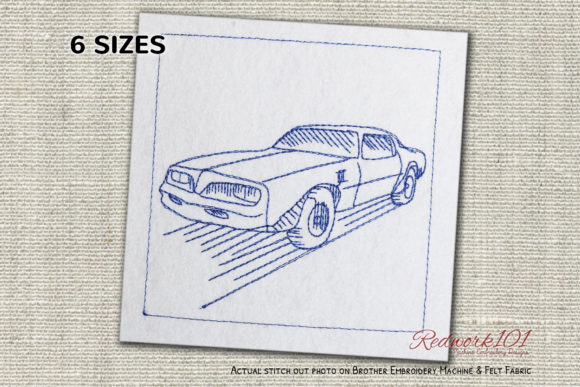
Before I started stitching samples, I took a careful look at the design structure. The 1977 Pontiac Firebird Trans Am Redwork title hints at a redwork style, which typically means single-color line art with a folk-art or classic tattoo influence. The description mentions that the Box Stitch shown in the picture is optional and that the color of the outer box may vary. That flexibility is important for a craft fair product because it lets me decide whether to frame the design with a border or let it stand alone. I prefer to test both options before committing to production.
First Impression: Bold, Clean, and Nostalgic
The 1977 Pontiac Firebird Trans Am Redwork design feels bold and automotive-inspired without being overly aggressive. The redwork technique gives it a hand-drawn, almost vintage tattoo feel. That matters when you are designing handmade product lines for a market booth. Customers walking past a table full of embroidered goods need to recognize the subject instantly. This design delivers that instant recognition. The Firebird hood emblem, the Trans Am badging cues, and the general shape of the car all read clearly from a few feet away.
In terms of mood, I would not call this design cute or rustic. It is masculine, nostalgic, and slightly retro. It works well for a booth that mixes automotive themes with Americana or vintage repair shop aesthetics. If you are an Etsy seller looking to expand into niche categories, this design fills a gap that floral and farmhouse motifs simply cannot cover.
Performance on Craft Fair Products
I tested the 1977 Pontiac Firebird Trans Am Redwork on several product types that I regularly bring to shows. Here is what I learned about each application.
Tote Bags and Market Bags
This design looks excellent on a sturdy cotton tote bag. The redwork line art stands out against natural canvas, black fabric, or even dark blue. I recommend using a lighter thread color if you stitch on dark fabric to maintain contrast. The design size, when hooped appropriately, creates a strong focal point on the center of the bag. Customers who own a classic Firebird or who grew up around them will stop at your booth specifically for this tote bag design.
Apron Embroidery
For apron embroidery, the 1977 Pontiac Firebird Trans Am Redwork works well on the chest pocket area or centered on the bib. The redwork style keeps it from feeling too heavy or cluttered. I stitched it on a khaki apron and used a deep red thread to match the Trans Am heritage. The result was clean, professional, and clearly readable. This is a strong option for selling at automotive swap meets or car show adjacent markets.
Tea Towel Embroidery
I was pleasantly surprised by how well this design translated to a linen tea towel. The tea towel embroidery market is usually dominated by botanical and kitchen themes, but an automotive towel can be a unique gift item. The design fits well within a standard 5x7 hoop, and the open line work of redwork means the towel remains soft and absorbent. Dense fill areas would stiffen the fabric, but this design avoids that issue.
Embroidered Patch
This is where the 1977 Pontiac Firebird Trans Am Redwork truly shines. As an embroidered patch, it becomes a standalone product that customers can sew onto jackets, hats, tool bags, or vests. I made a small batch of patches using a tear-away stabilizer and a tight satin border. The redwork lines held up well, and the optional box stitch gave the patch a finished, badge-like appearance. Patches are low-cost to produce and high-margin at craft fairs, making this a smart use of the design.
Caps and Hats
Stitching on a curved cap surface requires some care. The 1977 Pontiac Firebird Trans Am Redwork has moderate detail that can distort if the design is too large for the cap front. I recommend reducing the design slightly to fit within a 2.5 by 3 inch area on a structured cap. Use a cap hoop and a firm stabilizer to keep the fabric from shifting. The result is a clean, wearable piece of automotive embroidery that appeals to collectors and car club members.
Small Pouches and Pillow Covers
For small fabric pouches, the design works as a centered motif. I also tested it on a 12x12 pillow cover. The redwork style feels almost like a screen print when stitched on medium-weight cotton. It is not overly dense, so the pillow remains soft. This is a good option for handmade gift items that appeal to men who are hard to shop for.
Practical Selling and Production Points
The 1977 Pontiac Firebird Trans Am Redwork is easy to understand at a glance. That is critical for a craft fair product because customers make buying decisions quickly. The design does not require explanation. They see the Firebird, they recognize the car, and they decide to buy. This reduces the amount of selling I have to do and lets the product speak for itself.
As a focal design, it works best in the center of a product. Because it is redwork, it can also be used as a smaller accent on the corner of a towel or the edge of a bag, but I prefer it as a main element. The design photographs well for Etsy listings and printable mockup use. I shot a few mockups on a dark tote and a natural canvas apron, and both images looked crisp and professional.
For batch production, this design is repeatable. The stitch count is reasonable, the thread changes are minimal, and the hooping process is straightforward. I can stitch multiple units in a single session without constant thread breaks or repositioning headaches. That is essential for commercial embroidery work where time equals profit.
Careful-Use Notes for Production
No design is perfect for every surface. Here are the notes I took while testing the 1977 Pontiac Firebird Trans Am Redwork.
- Dense stitch areas: Redwork designs are typically line-based, so density is rarely an issue. However, if the optional box stitch is included, check that the corners are not overly dense. I recommend using a light density satin stitch for the box to avoid fabric puckering.
- Tiny details: The fine lines in the Firebird emblem require careful threading and proper tension. If your machine is not well-maintained, some details may skip or break. Test on scrap fabric first.
- Small lettering: If the design includes any text or year numbers, verify that the lettering is at least 0.25 inches tall. Anything smaller on a textured towel or cap may become unreadable.
- Thick fabric: On heavy canvas or denim, use a sharp needle and a medium-weight cutaway stabilizer. The redwork lines need to penetrate the fabric cleanly without breaking.
- Textured towels: Terry cloth and waffle weave towels can swallow fine details. I recommend a water-soluble topper to keep the stitches visible on top of the loops.
- Curved cap surfaces: Reduce the design size slightly to prevent distortion on the cap crown. Use a cap frame and avoid stretching the fabric too tightly.
- Dark fabric: On black or dark navy fabric, use a bright red or white thread. The thread colors need to pop against the background. A dark red on black fabric will disappear.
Visual Appeal and Customer Attention
The 1977 Pontiac Firebird Trans Am Redwork has a strong visual presence without being aggressive. It evokes a specific era and a specific automotive culture. At a craft fair, this design will attract a different demographic than the usual floral or farmhouse crowd. That is a good thing. Diversifying your booth with automotive designs broadens your customer base and increases the chance of impulse purchases.
In terms of product value, the redwork style looks premium. It feels curated, like something from a vintage garage or a specialty boutique. Customers perceive hand-embroidered automotive items as unique and thoughtful. The handmade quality of the stitching adds a tactile dimension that printed or heat-transfer goods cannot match.
For brand consistency, if you already sell other automotive or retro-themed items, this design fits perfectly. If you are adding it to a booth that is mostly farmhouse or modern, it may feel like an outlier. I recommend grouping it with other car-related products to create a dedicated section of your display.
Practical Embroidery Designer Notes
Before you start stitching the 1977 Pontiac Firebird Trans Am Redwork for your next craft fair, here are my standard production steps.
- Test the design on scrap fabric. Always stitch a sample before producing in bulk. Check for tension issues, thread breaks, and alignment.
- Check thread contrast. Hold the thread color against your chosen fabric in natural light. If the contrast is weak, choose a different color.
- Review spacing. Make sure the design is not too close to seams, zippers, or edges. Leave at least an inch of breathing room.
- Confirm hoop size. Verify that the design fits within your available hoops. The hoop size will determine the maximum product size you can use.
- Inspect stitch density. Redwork should be open and airy. If the design feels too tight, reduce the density in your software or choose a lighter stabilizer.
- Use the right stabilizer. For most fabrics, a medium tear-away stabilizer works. For stretchy or textured fabrics, use cutaway stabilizer.
- Create at least one real mockup. Photograph a finished product for your Etsy seller listing and your booth display. Customers respond to real images.
- Compare fabric colors. Test the design on at least three different fabric colors to see which one sells best. Natural, black, and dark blue are safe bets for this design.
- Confirm commercial licensing. Before selling finished product in quantity, check the license terms of the digital embroidery file. Some designers require a separate commercial license for production work.
Final Thoughts on the 1977 Pontiac Firebird Trans Am Redwork
This machine embroidery design is a solid addition to any small shop product lineup that targets automotive enthusiasts and vintage car fans. The redwork style is timeless, the subject matter is iconic, and the production demands are manageable. I have added it to my rotation for upcoming shows, and I expect it to perform well on tote bags, patches, and aprons.
If you are an Etsy seller or a creative entrepreneur looking to expand your Transportation category, this design is worth testing. The Embroidery quality is strong, and the customer appeal is genuine. Just remember to test your fabric, check your stabilizer, and confirm your licensing before you start stitching for sale. With the right preparation, the 1977 Pontiac Firebird Trans Am Redwork can become a standout item in your booth and a reliable source of revenue for your handmade market business.